How to train your dog with a GPS fence, tone first
A collar does not keep a dog in by itself: a tone-first plan to teach the boundary in about two weeks.

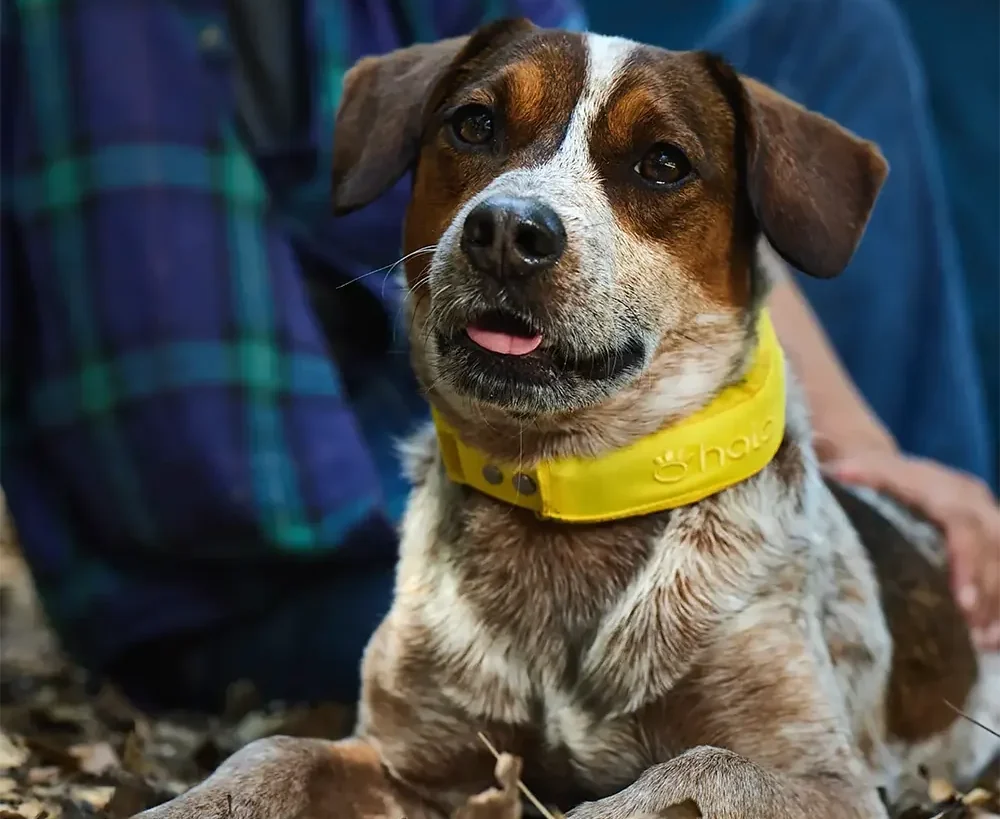
Halo Collar 59.2/10Read the review
A GPS collar does not keep a dog in by itself. It gives a signal, and your dog has to learn what that signal means: "turn around, the good stuff is back here". Brands quote about two weeks of short daily sessions. This guide is a tone-first plan that works with every fence collar we compare and never starts with static.
Before you start
- Fit the collar snugly but comfortably; brands include contact points for short and long coats (Halo's Perfect Fit kit, PetSafe's short and long contact points).
- Set the fence a little inside the real boundary, with open yard between it and the road.
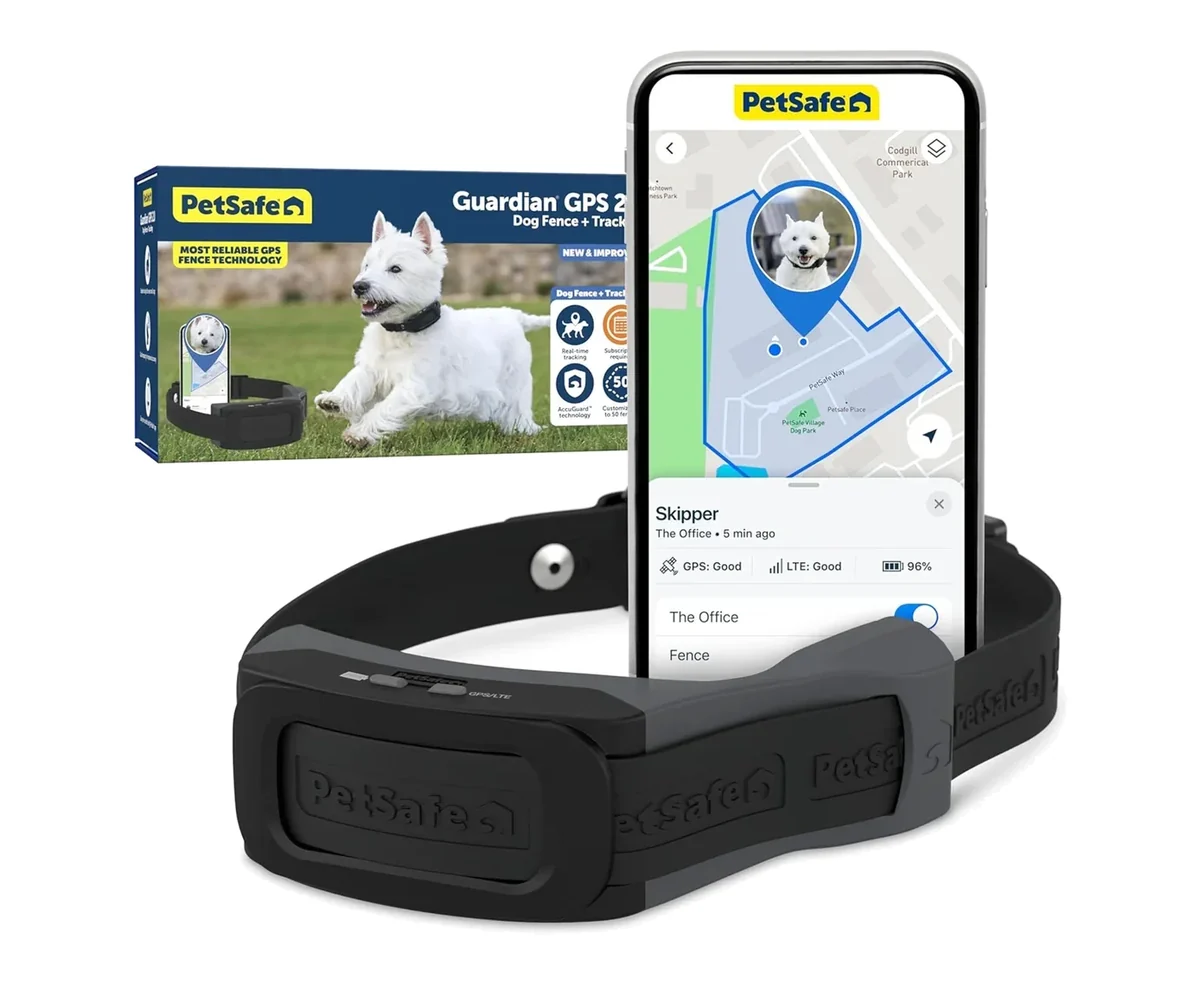
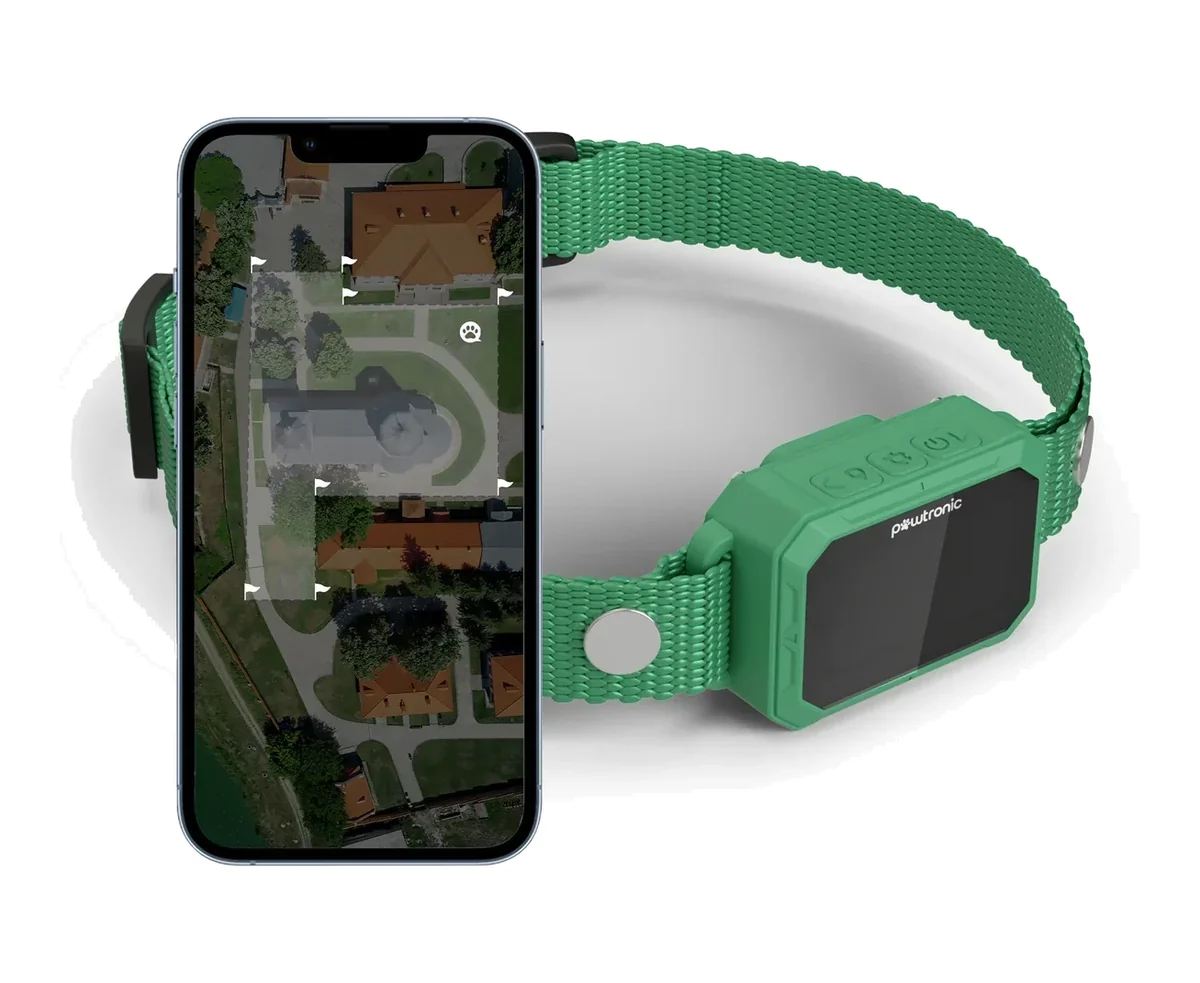
- Turn off static, and on Halo, PetSafe Guardian GPS 2.0, SpotOn and PawTronic choose a sound or sound + vibration mode.
- Place training flags where the warning zone starts. The PetSafe Stay & Play includes flags in the box.
A two-week plan
- Days 1 to 3: on leash, walk toward a flag. When the tone sounds, turn back with your dog, praise and treat well inside the line.
- Days 4 to 6: same walk, but let your dog choose to turn at the tone. Reward big.
- Days 7 to 9: add mild distractions inside the yard (a toy, a family member), still on a long leash.
- Days 10 to 12: off leash, supervised, short sessions. Keep rewarding turns at the tone.
- Days 13 and after: remove flags slowly, a few at a time, and keep supervising until your dog turns reliably.
PetSafe says a dog can learn its boundary in about 2 weeks with training and treats. Some dogs need longer; that is normal, not a failure.
About static
All the GPS fences in our main ranking can work without static, and Halo says static is never required on any of its feedback types. Pawious adds a useful safeguard: automatic correction stops after two cycles and drops to sound only. If your dog ignores the tone, the answer is usually more training, higher-value treats or a trainer, not a stronger correction.
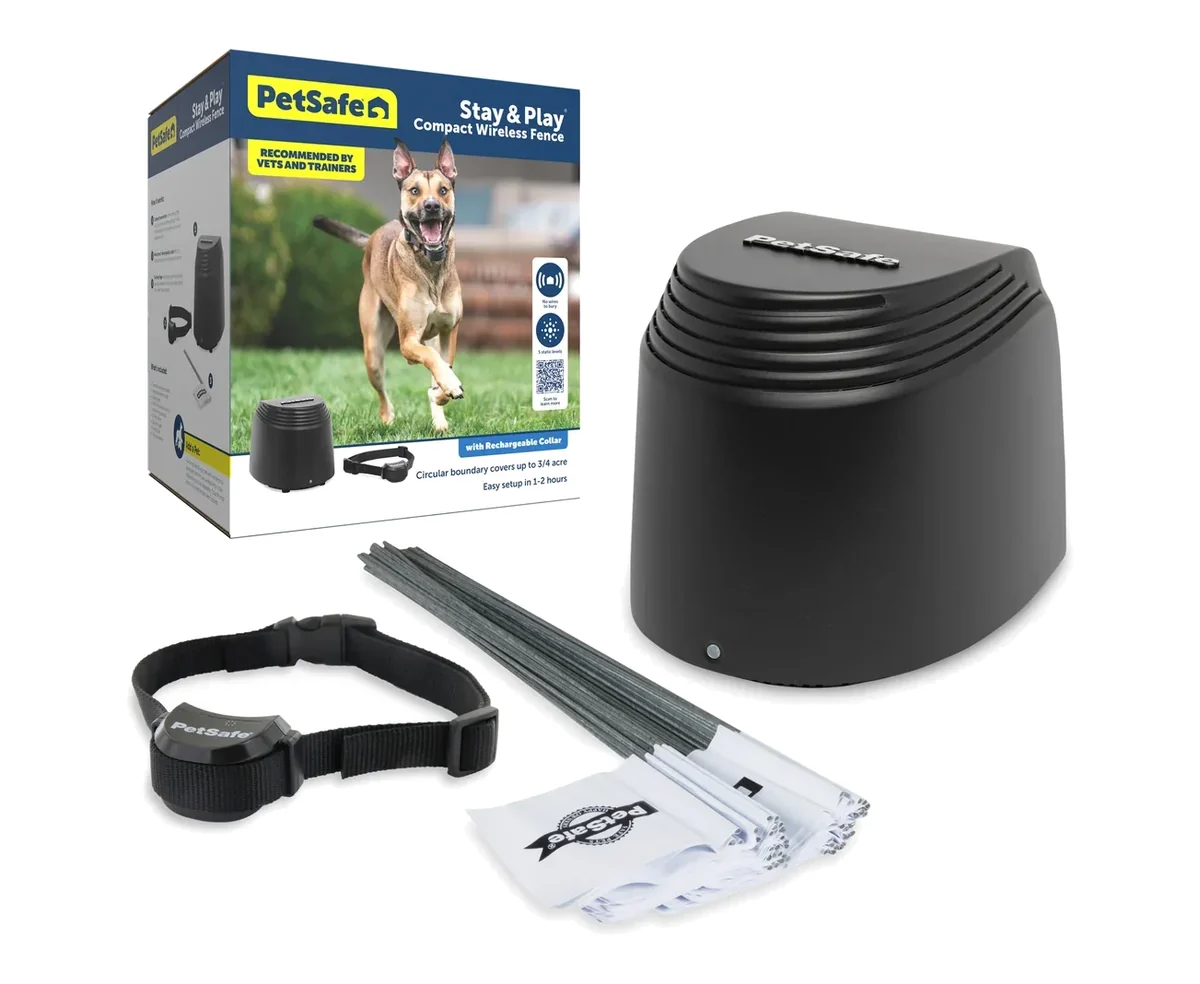
PetSafe Stay & Play Compact Wireless Fence8.8/10Read the review
Common mistakes
- Going off leash too soon. A dog that turned at the tone three times has not learned the boundary yet. Keep the leash on until the turn is automatic.
- Training near distractions first. A squirrel or a neighbor's dog on day two sets you back. Add distractions only once the turn at the tone is reliable.
- Drawing the line too close to the road. The warning zone sits inside the line, so a boundary along the curb puts the training right next to traffic.
- Fixing a fit problem with a stronger cue. If the dog does not react, check that the collar sits snugly and the contact points touch the skin before changing any level.
- Ending sessions on a failure. Stop after a good turn and a treat, even if the session was short.
Settings to choose, brand by brand
| Device | A gentle place to start |
|---|---|
| Halo Collar 4 and 5 | Sound or Cesar Millan voice cues, vibration second; static off |
| SpotOn Nova and Omni | The two warning tones and vibration; static off |
| PetSafe Guardian GPS 2.0 | Tone and vibration; static levels off |
| PawTronic Pro Series 2 | Sound mode, then sound + vibration |
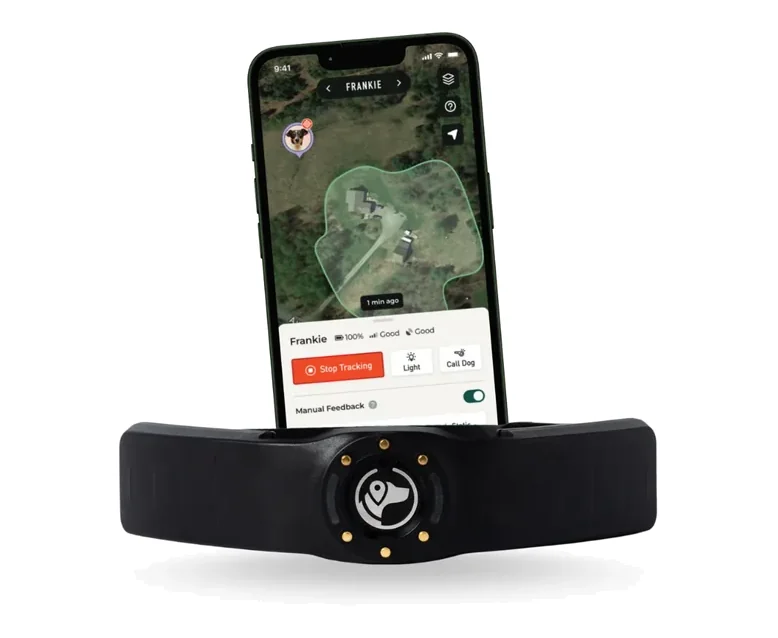
| Pawious XEdge | Sound and vibration; the two-cycle limit stays on |
| PetSafe Stay & Play | Tone-only mode, the first of its settings |
These are the modes each brand describes on its product pages; the menus can change with app updates. If a dog never responds to sound or vibration, that is a reason to call a trainer, not a reason to turn static on.
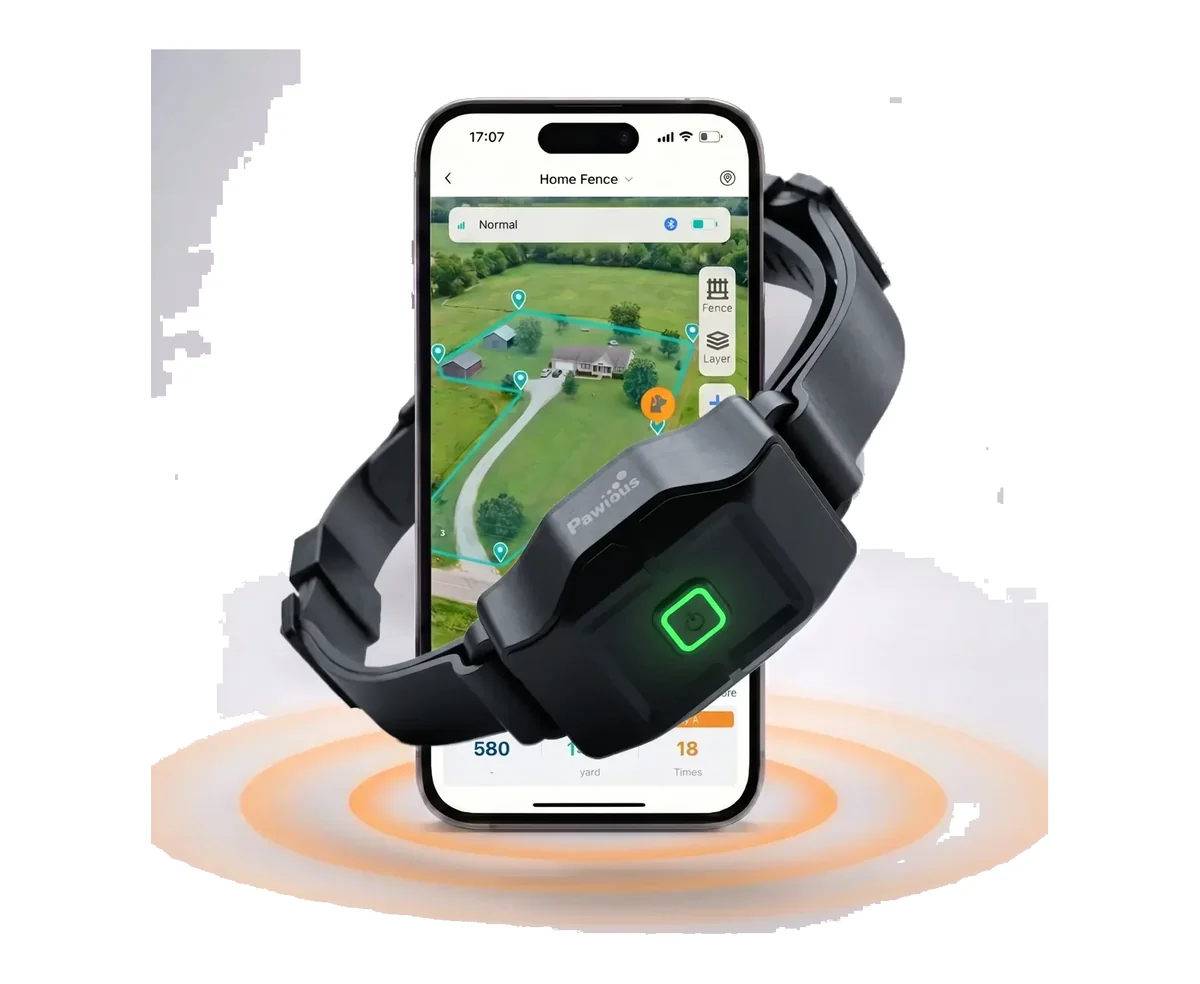 GPS dog fencePawious XEdge GPS Dog Fence
Figures from official manufacturer pages and US prices checked on November 9, 2026. Images: manufacturers. How we score: see our methodology.
Our selection
Three rated collars mentioned in this guide, with their 3-year cost.
Frequently asked questions
How long does it take to train a dog on a GPS fence?
About two weeks of short daily sessions for many dogs, according to PetSafe. Shy or very excited dogs may need longer.
Can I train a GPS fence without shock?
Yes. Every GPS fence in our main ranking offers tone or tone + vibration modes; static is optional.
Does Halo help with training?
Halo includes recorded Cesar Millan voice cues among its six feedback types, with static never required.
Should I use static correction on a GPS fence?
We would not start with it, and our score never rewards it. Every GPS fence in our main ranking can run on tone and vibration; if your dog ignores them, more training or a certified trainer is the better next step.
Do I still need training flags with a GPS fence?
For the first weeks, yes. Flags show your dog, and you, where the warning starts. Remove them a few at a time once your dog turns back reliably at the tone.
At what age can a puppy start GPS fence training?
Brands set their own minimums: PetSafe rates the Stay & Play for dogs from 6 months old. For GPS collars, follow the minimum weight the brand states and ask your vet if your puppy is still growing.
What if my dog runs through the boundary?
Go back a step: shorter sessions on leash, higher-value treats and flags back in place. Check the collar fit, and on Halo, SpotOn and PetSafe check the boundary on your phone in case it drifted near trees or buildings.